 This is our families favourite condiment. I try to make three batches of these every year with half for giving. My family get very excited when I make these again after the previous years batches have depleted. These pickles are great on the side with many meals. I personally love them with pork and on grilled sausages. I was taught to make this recipe by my Mother, who was taught by her Grandmother, my namesake, Grammie Mina Lindsay. I did research and this recipe is a Maritime tradition dating back to the early 1900’s made by Lady Marie Ashburnhams sister Lucy of Fredericton, New Brunswick. When I started making these for y family I changed the recipe, by using a food processor to chop the vegetables. Its makes more of a relish, instead of the more chunkier pickle. You may keep with tradition by cutting all the onions and cucumbers into small pieces by hand. If you cut them too chunky it will closely resemble a mustard pickle recipe. My mothers advice was to never double this recipe. However if you choose to, you will need to cook much longer before it begins to thicken.
Lady Ashburnham Pickle Materials & Ingredients:
Materials
- Large stock pot
- Colander for draining
- Canning jars and new lids and covers: 5-6 – 500 ml
- Large bowl
- Ladle
- Wide neck funnel (*optional but does make filling the jars easier)
- Jar lifter (*optional but helps to remove hot jars safely)
- Canner, pressure cooker, or large covered pot with a rack on the bottom (to prevent jars from cracking)
- Labels *optional
Ingredients
- 6 Large Cucumbers – peeled and seeded
- 1/4 cup pickling salt
- 4-5 medium to large onions (approx. 4 cups of finely chopped)
- 2.5 cups cider vinegar
- 1 small to medium sweet pepper
- 2 – 3/4 cups sugar
- 3 Tbsp flour
- 1 tsp mustard seed
- 1 Tbsp dry mustard
- 1 tsp celery seed
- 1 tsp turmeric

- Peel and seed cucumbers

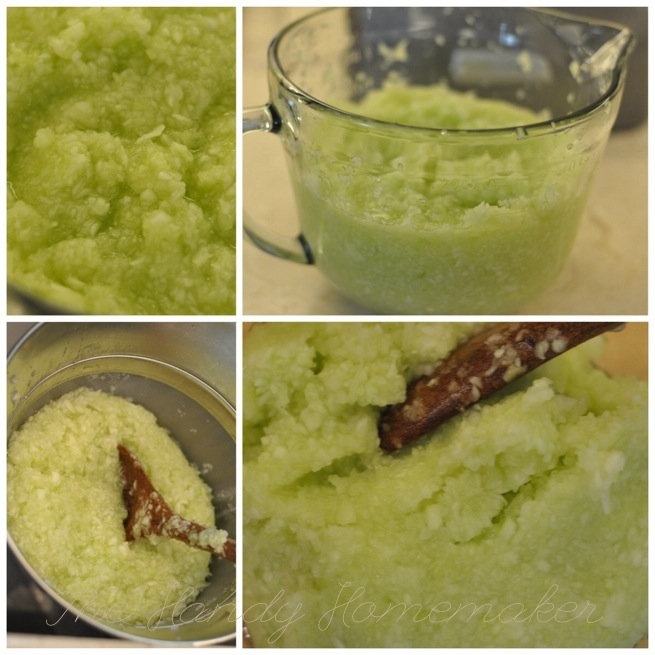
2. Place in food processor in batches and pulse until finely chopped to relish size. Add to a bowl and mix in the 1/4 cup of pickling salt.
3. Let sit overnight, as per my moms recipe. *(I have prepared these in the morning and then let sit in the salt for 5-6 hours and they turned out perfect)
4. Rinse and drain

5. Peel and chop onions in half or quarters
6. Place in food processor in batches and pulse until finely chopped to relish size
7. Finely chop red pepper.

8. To a large pot add all remaining ingredients, cucumbers, onions, and red pepper
9. Stir to combine
10. Simmer over medium/high heat for 30 minutes stirring occasionally until thickened. Be careful not to bring to a boil, these pickles can splash up boiling hot liquid and it’s hard to stir splashing lava like pickles and the bottom can burn quickly.

11. Fill canner with water and place jars in canner. Bring to a boil over high heat or place the jars in an oven set at 200°F for 15 minutes
12. Remove jars from boiling water. Set lids in boiling water to soften for 5-10 minutes (There has been changes to the canning rules for lids made by ball as of 2013. They have been made BPA free and now only recommend washing in hot soapy water and rinse well before using. Follow manufacturers directions for all other brands)
13. Fill each warm/hot jar with the pickles to 1 inch of the rim
14. Wipe the rim with a clean cloth and place the cover on.

15. Place jars in canner, cover, and boil for 25-30 minutes. If I only have a jar or two left from my batch to boil, I place a couple of empty coverless jars in the water bath to prevent the jars filled with pickles from falling over. (My mom’s recipe, as with most older recipes, do not require this step, but I process in the canner for added precaution)
16. Remove jars from water, let cool, wipe jars clean

17. *Optional – Label and store in a cool dark place. I buy these labels at My Own Labels as I like to give these in a gift basket, or take as a housewarming gift for dinner at a friends.

My beautiful mother was in Halifax for a visit and I asked her to help me make another batch of Lady Ashburnham Pickles her way, the non lazy way 😉 with no food processor. You can see that she still finely chops the cucumbers but they are more pickle like then relish.






 Dandelions & Dates
Leave a reply to Laurie Moore Cancel reply